For many job shops and contract manufacturers, the production reality is simple: no two jobs are the same. One week it is a batch of aluminum aerospace brackets. The next week it is a run of stainless steel medical components. Then a one-off prototype for a new product design. This is the world of high-mix, low-volume (HMLV) production — and it places unique demands on CNC machining centers.
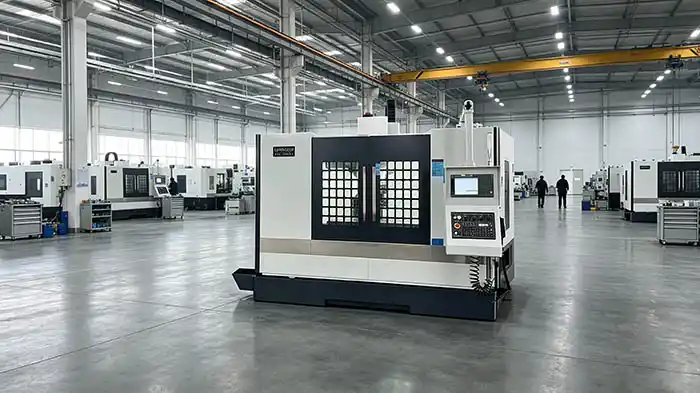
Vertical machining centers (VMCs) have become a cornerstone of high-mix job shop operations. Their combination of accessibility, versatility, and cost-effectiveness makes them well-suited for environments where part variety is high, batch sizes are small, and changeovers are frequent. This article examines how VMCs support high-mix production, what to look for in a machine for this environment, and how EUMASEIKI's EV series addresses these specific needs.
A high-mix, low-volume job shop is characterized by several distinct features:
These characteristics create a unique set of challenges. Setup time becomes a critical cost factor — when batch sizes are small, the time spent changing over between jobs can dominate the total production cost. Tool management becomes more complex as different jobs require different tooling. And scheduling must balance multiple jobs competing for the same machine capacity.
Not all machining platforms are equally suited to high-mix environments. Here is why VMCs are often the preferred choice:
VMCs use a vertical spindle orientation with workpieces mounted directly on the table. This configuration offers straightforward part loading and unloading, which is a significant advantage when setups change frequently. Operators can see exactly what the tool is doing, making setup and inspection more intuitive.
In high-mix environments where a machine may run three or four different jobs in a single shift, this ease of access translates directly to reduced non-productive time.
Floor space is often at a premium in job shops. VMCs generally consume less floor space than horizontal machining centers (HMCs) of comparable capacity. This allows shops to place more spindles in the same square footage — or to fit a capable machining center into an existing layout without costly expansion.
For a job shop with diverse customer demands but uncertain future workloads, capital efficiency matters. VMCs typically represent a lower upfront investment compared to HMCs or 5-axis platforms. This makes them an accessible entry point for growing shops and a cost-effective addition for established operations.
A well-configured VMC can handle a wide range of operations in a single setup: face milling, contouring, pocketing, drilling, tapping, boring, and reaming. This versatility means the same machine can move from a roughing job on steel in the morning to a finishing job on aluminum in the afternoon — with minimal adjustment.
For job shops that occasionally need multi-sided machining, many VMCs can be equipped with an optional 4-axis rotary table. This enables 5-face machining in a single setup, reducing the need for multiple fixturings and the associated handling time and positioning errors. This capability is particularly valuable for job shops that take on mold work or complex prismatic parts.
Not every VMC is equally suited to high-mix production. When evaluating a machine for this environment, several features deserve particular attention.
In high-mix production, the tool magazine is not just about capacity — it is about flexibility. A 24-tool magazine is sufficient for many general-purpose applications, allowing a typical mix of roughing, finishing, drilling, and tapping tools to remain loaded for quick job changes.
For shops handling more complex parts or wider material variety, optional larger magazines (32 positions or more) can reduce the need to unload and reload tools between jobs.
Rapid tool change time is equally critical. In small-batch production, every second of tool-change time is multiplied across multiple tools per job and multiple jobs per day. Arm-type tool changers with 2–3 second tool-to-tool times help minimize this overhead.
High-mix job shops rarely machine a single material exclusively. A VMC that offers a wide spindle speed range — from 6,000 rpm for heavy cutting in steel to 12,000 or 15,000 rpm for high-speed machining in aluminum — provides the flexibility to handle diverse materials without compromise.
Motor power and torque are equally important. For tougher materials like stainless steel or Inconel, higher torque at lower speeds is essential for productive roughing. EV series models with ISO 50 taper, for example, deliver 22/33 kW power and 140/260 Nm torque, with optional high-torque configurations reaching 210/380 Nm.
High-mix shops handle parts of varying sizes. A worktable that accommodates both small prototypes and larger production parts — with sufficient load capacity — reduces the need to move jobs to different machines based solely on size. EV series models offer table sizes ranging from 1000×550 mm to 2000×900 mm, with load capacities from 650 kg to 1800 kg.
Chip evacuation is one of the inherent challenges of vertical machining — chips tend to accumulate on the workpiece and table. For high-mix shops running diverse materials, effective chip management is essential to maintain surface finish and tool life. Features such as through-spindle coolant and chip conveyors help address this challenge.
Job shops often work to tight tolerances — aerospace and medical components may require 0.01 mm or better. In high-mix environments where the machine is constantly changing between jobs and materials, thermal stability becomes particularly important. Machines with marble mineral castings provide superior damping and thermal stability compared to traditional cast iron, helping maintain accuracy across varying operating conditions.
EUMASEIKI's EV series vertical machining centers incorporate several design features that address the specific needs of high-mix job shops.
Marble mineral castings for the base and column provide vibration damping and thermal stability — critical for maintaining accuracy when switching between materials and cutting conditions. The secondary annealing process and extended stress-relief periods ensure dimensional stability over the machine's service life.
Core components — spindle, ball screw, and guideway — are sourced from high-end mainstream brands from Taiwan and Japan. Assembly is carried out by experienced technicians with years of professional experience.
Customization options allow job shops to tailor the machine to their specific production mix: spindle speed variants from 6,000 to 15,000 rpm, multiple taper types (BT, BBT, HSK), and an optional 4-axis rotary table for 5-face machining.
Standard features that support high-mix efficiency include a 24-tool arm-type tool changer, automatic centralized lubrication, spindle oil cooling, and a FANUC Oi-MF or Siemens 828D control system.
To explore how the EV series can be configured for your specific production mix, review the CNC machining series product page for detailed specifications and available options.
Use this checklist to evaluate whether a VMC is well-suited to your high-mix production environment:
High-mix low-volume (HMLV) involves machining many different part numbers in small quantities, with frequent changeovers. Low-mix high-volume (LMHV) involves machining a small number of part numbers in large quantities, with infrequent changeovers. Each production model requires different machine characteristics — HMLV demands flexibility and quick setup, while LMHV prioritizes throughput and automation.
For most job shops with high part variety and small batch sizes, a VMC is typically the better choice due to faster setup, easier access, lower cost, and smaller footprint. HMCs become advantageous when running medium to high volumes of parts requiring four or five-sided machining.
Key strategies include using quick-change workholding systems, presetting tools offline, maintaining organized tooling, using CAM software with proven post-processors, and standardizing setup procedures across operators.
A machine offering 8,000–12,000 rpm provides a good balance for most job shops handling steel, aluminum, and cast iron. For shops that machine significant amounts of aluminum or nonferrous metals, 15,000 rpm or higher is beneficial. For heavy steel or exotics, lower-speed high-torque configurations are more appropriate.
Rigidity directly impacts accuracy, surface finish, and tool life — especially when machining harder materials or taking heavy cuts. Machines with mineral castings, roller-type linear guideways, and robust construction maintain accuracy across diverse materials and cutting conditions.
High-mix, low-volume production is the reality for many job shops, contract manufacturers, and specialized suppliers. In this environment, the right vertical machining center is not just a machine tool — it is a platform for flexibility, responsiveness, and profitable small-batch production.
The ideal VMC for high-mix work combines rapid setup, wide material capability, sufficient tool capacity, and thermal stability. It adapts to changing job requirements without sacrificing accuracy or productivity.
For job shops evaluating their next machining center investment, the EV series from EUMASEIKI offers a range of configurations designed to meet the demands of high-mix production. To explore specific models and available options, review the CNC machining series product page. For application-specific questions and technical consultation, contact the engineering team to discuss your production requirements.


 English
 中文
中文 Pусский

