
Your CNC machining center stops. The spindle goes silent. Operators stand around waiting. Production schedules slip. And the clock keeps ticking.
Unplanned downtime is one of the most expensive problems in any machine shop. Industry research shows that unplanned downtime can cost manufacturers up to $260,000 per hour. For shops running a vertical machining center, even a few hours of unexpected stoppage can mean lost production, delayed deliveries, and frustrated customers.
The good news? Most downtime is preventable. The key is moving from reactive firefighting to proactive prevention. Here are five proven strategies to reduce CNC machining center downtime and keep your vertical machining center running reliably.
Many shops run their CNC machining centers until something breaks. Then they call for repairs, pay premium rates for emergency service, and lose production time while waiting for parts. This reactive approach is the most expensive way to operate.
A preventive maintenance program changes that dynamic. Instead of waiting for failures, you perform scheduled inspections, cleaning, lubrication, and component replacements at predetermined intervals.
The results speak for themselves. One case study found that after implementing a preventive maintenance program over six weeks, machine breakdowns decreased by approximately 45%, and average weekly downtime dropped from 6.2 hours to 3.4 hours—a 45% reduction.
For a CNC vertical machining center, preventive maintenance should include:Daily checks of coolant levels and air filters.Weekly lubrication of guideways and ball screws.Monthly inspection of spindle condition and vibration.Quarterly verification of positioning accuracy.The upfront cost of preventive maintenance is far lower than the cost of unplanned repairs. And the planning aspect is especially valuable for shops that cannot afford unexpected downtime.
Preventive maintenance is good. Predictive maintenance is better.
Traditional preventive maintenance replaces components based on fixed schedules—every 2,000 hours, for example. But this approach has a problem: it often replaces healthy parts prematurely or, worse, misses a failure that happens before the scheduled date.
Predictive maintenance uses sensors and data analytics to monitor the actual condition of your CNC machining center in real time. By analyzing vibration, temperature, and acoustic data, the system can detect developing issues before they become failures.
This approach can reduce maintenance costs by up to 25% and downtime by 50%. For a vertical machining center running high-value aerospace or medical parts, the ability to predict spindle bearing wear or tool breakage before it happens protects both the machine and the workpiece.
Key components to monitor on any CNC vertical machining center:Spindle vibration — early indicator of bearing wear or imbalance.Spindle temperature — abnormal heat suggests lubrication or cooling problems.Servo motor load — detects tool dulling or excessive cutting forces.Positioning accuracy — gradual drift indicates ballscrew or guideway wear.
The investment in sensors and software pays for itself quickly when it prevents a single major spindle failure.
Your operators are your first line of defense against CNC machining center downtime. They hear the machine run every day. They see the parts coming off. They notice when something feels different.
Yet many shops fail to train operators on what to look for. Long before a spindle fails or a servo alarm appears, there are subtle symptoms that indicate something is going wrong.
Train your team to recognize these warning signs on your vertical machining center:
Changes in surface finish quality.Unusual machine noise or vibration.Persistent spindle overheating.Recurring servo alarms.Gradual loss of positioning accuracy.
When operators can identify developing issues early, you can schedule repairs during planned downtime rather than reacting to an emergency stoppage. This simple shift in awareness can dramatically reduce unplanned downtime.
Not all downtime is unplanned. Setup time, tool changes, and changeovers also consume valuable production hours.
You can reduce this downtime with a few practical steps:Prepare tooling and programs offline — don't wait until the machine stops to start setup.Use modular and standardized fixtures — reduce the time required to switch between jobs.Complete kitting — gather all required tools, materials, and gauges before the machine stops.Use tool presetters — set tools correctly before they go into the machine, reducing trial cuts and adjustments.
For shops running a CNC vertical machining center with frequent job changes, these setup reductions add up to significant time savings over a year.
Some CNC machining centers are simply more reliable than others. The design and construction of the machine itself affects how often it breaks down and how easy it is to maintain.
When evaluating a vertical machining center, consider these reliability factors:
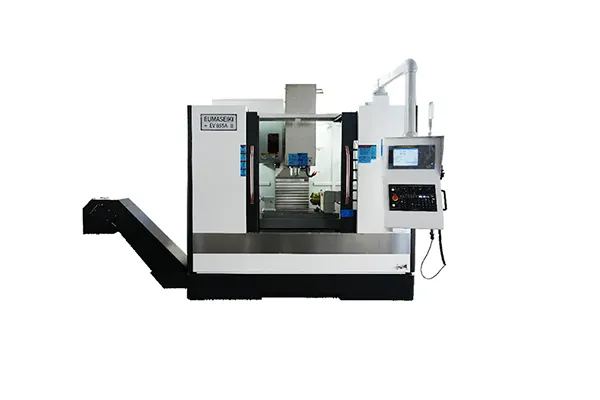
Structural stability — Machines with well-designed castings and effective stress-relief processes maintain their geometry longer. The Eumaseiki EV Series, for example, uses marble mineral castings with secondary annealing and extended stress relief, which eliminates residual stress before assembly and keeps the machine square over years of use.
Component quality — The spindle, ballscrews, and guideways determine how long a machine stays accurate. Premium components from established Taiwanese and Japanese brands cost more upfront but reduce the frequency of repairs and replacements.
Maintenance accessibility — Some machines are designed so that routine maintenance tasks—lubrication, filter changes, inspections—are quick and easy. Others require disassembling half the machine to reach a component. This difference matters every time you perform scheduled maintenance.
Support availability — When something does go wrong, how quickly can you get parts and service? Machines with strong after-sales support reduce mean time to repair (MTTR), which directly reduces downtime.
Reducing CNC machining center downtime is not about a single fix. It is about building a system—preventive maintenance schedules, predictive monitoring, operator training, setup optimization, and choosing reliable equipment—that works together to keep your vertical machining center running.
Preventive maintenance can reduce breakdowns by 45% and downtime by 45%.Predictive maintenance can cut downtime by up to 50%.Operator training on warning signs catches issues before they become failures.Setup time reductions compound into significant productivity gains.Machine design and component quality directly affect long-term reliability and maintenance costs.Strong after-sales support reduces mean time to repair.
Whether you are looking to improve maintenance practices on your existing CNC machining center or evaluating a new vertical machining center with better reliability and service support, we can help.


 English
 中文
中文 Pусский

