You’ve seen the perfect finishes. You’ve heard about the reduced setups. But when you start looking at “machining centers,” the spec sheets blur together, and the price tags make you wince.
Here is a reality check most sales brochures won’t tell you: buying the wrong advanced machine costs more than buying no machine at all. One shop owner recently shared, “We bought a massive trunnion machine for aerospace parts, but 80% of our work is small medical components. We paid for rigidity we never use and lost floor space we desperately needed.”
So, how do you navigate this decision without falling into the “bigger is better” trap? Let’s break down the decision logic based on three real-world dimensions that actually matter for a job shop or small production facility.
Most buyers start with the workpiece envelope. That is a mistake. You should start with the variety of parts.
Do you run 500 identical turbine blades, or 50 pieces of 15 different brackets?
For high-mix, low-volume: Consider a machine with a smaller work envelope but faster pallet changing. You need throughput, not just size.
For large, single parts: Look at the bed length and Z-axis clearance. But beware: a massive table often means slower acceleration.
Here is the dirty secret of workshop equipment: A machine that holds 10 parts at once is useless if it takes 20 minutes to switch between jobs. Calculate your “chip-to-chip” time, not just the cutting speed.
You are not buying steel and servos. You are buying a programming environment. The most common pain point we hear from shop foremen isn't spindle power; it's CAM (Computer-Aided Manufacturing) post-processors and operator hesitation.
Ask yourself honestly: Does your lead programmer dream in 3+2 axis, or simultaneous 5-axis?
3+2 (Positional): Easier to learn. Great for undercuts and complex angles. Most shops actually only need this 90% of the time.
Simultaneous: Requires advanced CAM and constant supervision. If you don’t have the headcount for a specialist, you are buying a very expensive paperweight.
This is where the “budget” brands hurt you. A machine sits idle. A brand with a local service rep saves your weekend. You need to investigate the mean time to repair (MTTR) before you sign the PO.
So, which configuration hits the sweet spot for a shop doing general engineering, molds, or automotive prototypes? You don’t need a 40-ton monster. You need rigidity, a manageable footprint, and a control that your night shift can handle.
According to industry machinery audits (based on 2024-2025 equipment utilization data), the most underrated feature is thermal stability. A machine that doesn’t need a 2-hour warm-up on a Monday morning is a machine that makes you money.
If you are looking for a setup that balances these three axes (part size, operator skill, and serviceability), you might want to explore the modular design approach here. It solves the “training cliff” by keeping the interface intuitive.
Forget the marketing fluff. Print this table out and fill it in for the three shortlisted machines on your floor.
| Feature | Entry-Level Value | Performance Standard | Overkill (Avoid) |
|---|---|---|---|
| Spindle Speed | 12-15k RPM (Aluminum/Steel) | 15-18k RPM (Versatile) | 30k+ RPM (Needs special tooling) |
| Tool Magazine | 30-40 tools (Standard) | 60 tools (Mixed jobs) | 120+ tools (Mass production) |
| Floor Space | <100 sq ft | 100-150 sq ft | >200 sq ft (Hire a new guy to walk around it) |
| Coolant System | Standard | Through-spindle (TSC) ready | High-pressure TSC (Messy for quick prototypes) |
False. Many complex parts (impellers, medical implants) need it. But for 80% of industrial parts with undercuts or angled features, 3+2 positioning is the smarter play. It is faster, safer, and the code is easier to debug.
If you realize that you genuinely need simultaneous capability for those tricky geometries, don’t sacrifice the rigidity of the base casting. Look for a machine that started as a 5-axis platform, not a 3-axis machine retrofitted with a rotary table.
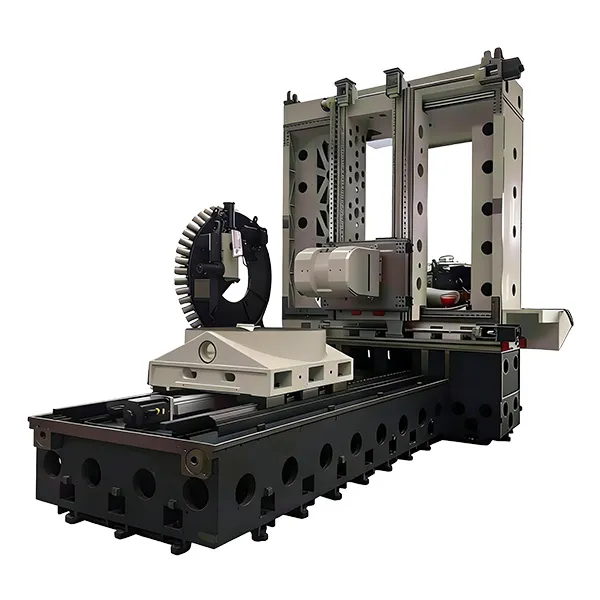
Choose a large gantry type if you do aerospace spars or long extrusions.
Choose a swivel-head (universal) type if you do molds and heavy steel removal. You keep the part stationary.
Choose a compact 5‑axis machine if your average part fits in a shoebox. You want high spindle utilization.
For the typical job shop looking to move up from 3-axis without breaking the bank on installation and training, the HU Series offers a practical balance. You can review the technical specifications for this specific configuration to see how the thermal compensation works.
Don't buy the machine. Buy the solution for your top 3 most painful parts. Take your worst part—the one with five separate setups—and ask the vendor to run it. If they hesitate, walk away. If they prove it, sign the deal.
If you are currently evaluating workshop equipment upgrades for Q3 and want to avoid the usual "feature bloat," book a application review focused purely on your part mix. Sometimes the right fit is smaller, smarter, and more reliable than the flagship model.


 English
 中文
中文 Pусский

