
Let me be blunt. If you are still running a 3-axis setup for parts with undercuts, angled holes, or organic curves, you are not just losing cycle time—you are bleeding money quietly on every single work order. Most shop owners search for “when to upgrade” because they hit a wall: rejected batches, impossible geometries, or a nightmare quoting process for a part that needs four separate clamping operations. That is the real signal. Your machining center is not the bottleneck yet—but your workflow is.
The frustration usually starts with a specific part. A turbine blade, a medical implant, or an aerospace bracket. You look at the 3-axis machine, then at the stock, and you already know. The vertical tool path cannot touch the undercut. You call it “the impossible angle.” And you are right. Standard three-axis milling simply does not possess the degrees of freedom to machine a complex contour from every side in one go. The tool cannot tilt. The part cannot rotate past a certain point. Your operators end up spending hours designing custom fixtures and multiple setups that introduce alignment errors every single time.
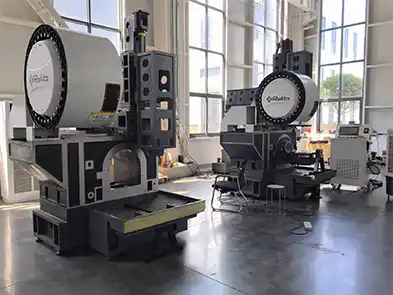
Let us visualize a typical job that sends shivers down a production manager’s spine. You have a valve body with cross-drilled holes and pockets on five sides. With a 3-axis vertical mill, here is the reality: load the part, machine the top. Unclamp, flip, indicate it in again, machine the bottom. Unclamp, turn sideways, pray the fixture holds, machine the left side. Unclamp, rotate again for the back. Every new orientation adds not just labor but a chance for cumulative tolerance stack-ups. By the time you finish the fourth setup, the first face might be out of tolerance.
This is not just inefficiency. It is inaccuracy baked into the process. Industry data suggests that when processing complex parts, three-axis milling machines often require multiple clamping and repositioning steps, which not only increases operational difficulty but may also lead to a decrease in machining accuracy due to alignment errors. Furthermore, the tool configuration in a 3-axis system struggles with features like deep cavities or inclined pockets that demand tilted tool orientation. And it gets worse. If your part geometry contains undercuts or curved surfaces, a 3-axis tool simply cannot reach without specialized, expensive custom tooling.
So you are convinced your people are fighting a losing battle. But the CFO wants numbers. I get it. When comparing CNC costs, a wrong choice in axes can make your operational expenses skyrocket instantly. Here is what the real world tells us about the investment.
A comprehensive comparison of 3-axis and 5-axis manufacturing reveals that each has its own strengths—3-axis suits standard parts and mass production, while 5-axis excels at complex surfaces, inclined hole structures, and high-precision requirements. However, when considering a full 5-axis simultaneous machining center, the initial price tag tends to be higher. But let me ask you: have you calculated the sliding costs of your current method? Every new fixture, each bit of scrap, and every manual touch-off adds up quietly in your ledger.
For a shop handling high-mix, low-volume complex components like die molds or aerospace parts, switching to a 5-axis system often yields payback periods as short as 12 to 18 months. Some smaller factories producing upwards of 10,000 parts annually see a full return on investment within 2-3 years, with initial outlays ranging from $125,000 to $250,000. Think of it this way: the extra cash tied up in work-in-progress inventory (all those parts sitting on fixtures waiting for the next setup) could be funding your upgrade.
Before you jump to full continuous 5-axis machining, you might consider a 4-axis solution. Indexed 4-axis rotation gives you access to multiple sides of a part without complex programming. For prismatic parts needing holes on four sides, a 4-axis trunnion table is a massive improvement over a standard 3-axis vise.
However, it has strict limitations. A 4-axis machine gives you indexed rotation and better fixture access without the programming complexity of full 5-axis motion. But the moment you encounter a contoured surface requiring simultaneous motion across a curved plane, the 4-axis setup fails. You still need multiple operations for organic shapes. For many shops, 4-axis serves as a transitional tool while they build the toolchain—CAD/CAM skills, post-processors, and operator training—necessary for 5-axis. But the inevitable conclusion for advanced geometrically-complex parts is a full 5-axis solution.
If you recognize these roadblocks—endless setups, tolerance creep, impossible angles—then you are looking for a solution that bridges the gap between high-volume affordability and high-end precision. This is where recognizing the differences between 3-axis and multi-axis configurations becomes essential for your bottom line. A 5-axis CNC machine offers the ability to machine complex geometries in a single clamping operation, slashing lead times and improving surface finishes dramatically.
One path to explore involves modern multitasking platforms that integrate robust spindles with versatile rotary axes. Rather than a massive, million-dollar monolithic machine, some manufacturers benefit from a modular approach. Euma Seiki’s line of CNC machining equipment focuses on this specific pain point: staying productive without overshooting your budget.
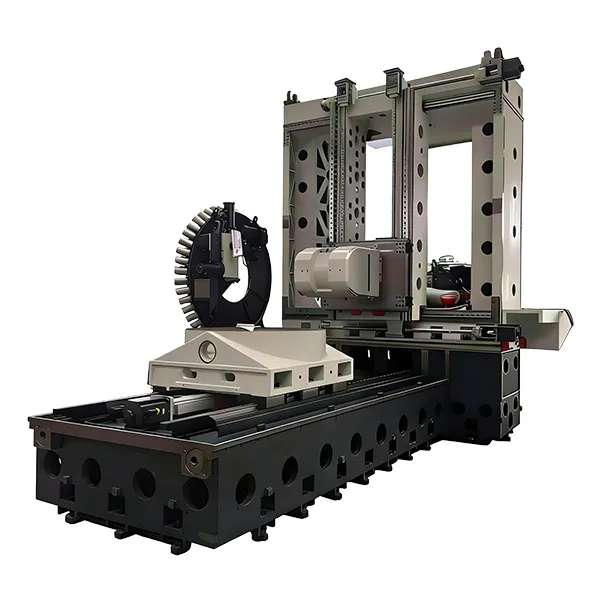
Look, I was visiting a mid-sized job shop in the Midwest recently. They made fluid power components. Their 3-axis Haas was tied up 80 hours a week on a single family of parts because of the “flip-and-mill” dance. When they analyzed the actual cost per part, their setup labor was nearly 35% of the job cost. They knew they needed an upgrade, but they were terrified of the complexity of 5-axis programming.
What they needed was a custom-tailored package. A 5-axis trunnion table retrofitted onto a stable platform. A post-processor already configured for their CAM software. And most importantly, a vendor that understood that small shops don’t have a dedicated applications engineer on staff. This requirement for application-specific engineering is where generic machine tool distributors fail.
Specific industry needs drive the upgrade decision harshly:
Aerautics & Automotive: You need high-speed machining of large structural frames and turbine impellers. Surface finish cannot be compromised.
Medical Devices: Requires micro-machining accuracy for bone screws and prosthetics, often in stainless steel or titanium.
Mold & Die: Demands hard milling capabilities with extreme rigidity to avoid chatter on hardened steels.
General Engineering: Benefits from reduced cycle times to push throughput.
These aren’t generic sales categories. These are the actual environments where 3-axis geometry locks you out of contracts.
So you decide to pull the trigger. How do you do it without disruption? First, run a real part simulation. Take your worst current headache part. Run it on a 3-axis, then simulate the 5-axis toolpath. Compare the cycle times. In many cases, a 3-axis job might be 45 minutes of machining plus 30 minutes of setup. A 5-axis job might be 35 minutes of machining with zero setup time in between parts. The math changes fast.
Second, consider financing and trade-in options. Many suppliers allow you to trade in existing 3-axis equipment to offset the down payment. If you are staying with a specific brand, they often offer turnkey commissioning where they set up the post, train your lead machinist, and verify the first part. That service is worth its weight in gold.
Lastly, do not ignore the software side. The hardware is only half the battle. If your CAM software can’t generate collision-free toolpaths, you will crash a $30,000 spindle on day three. Ensure your upgrade package includes certified post-processing for your specific control system. No exceptions.
Upgrading isn’t just about solving today’s problems. It is about bidding on tomorrow’s jobs. When a potential client sends you a STEP file with compound angles and freeform surfaces, do you immediately send it to a competitor with 5-axis capacity? Or do you quote it confidently? The market for multi-axis machining is growing rapidly. Global market reports indicate that the 5-axis CNC machining sector was valued at approximately USD 3.45 billion in 2025, with a projected CAGR exceeding 7% through 2032, reflecting the escalating demand for complex, high-precision components.
You need to be part of that growth curve. Not on the outside looking in. When you visit a modern trade show like EMO or IMTS, look around. The dominant technology is not 3-axis. It is multi-axis, often with integrated automation like pallet changers and robotic loaders. If you are still manually clamping parts in a 3-axis vise for a 5-face job, your effective hourly rate is dropping every time the machine stops for a flip.
There are only three reasons to stick with 3-axis:
You only make flat plates or prismatic blocks with zero angled features.
Your annual volume of complex parts is less than 200 units.
You have infinite time and zero labor costs for setups.
For everyone else, the upgrade is a matter of when, not if. The hidden costs of multiple setups aren’t just financial—they are strategic. Every hour your machinist spends indicating a part is an hour they are not spending on high-value programming or process improvement. Every scrap part from an alignment error is a shot at your profit margin and delivery reputation. Don’t wait until a key client walks because your tolerances slipped. The best time to upgrade was last year. The second best time is now.


 English
 中文
中文 Pусский

