Walk into almost any job shop, and you’ll hear the same complaint: “We spend more time setting up than actually cutting.” If you’re running a mix of short runs and one‑offs, you already know the numbers hurt. A 5‑Axis Mill changes that equation dramatically—not by adding complexity, but by eliminating the reason you keep stopping the machine in the first place. According to industry benchmarks, a six‑machine shop can lose 6 to 12 machine‑hours daily to setups and operator interventions. That’s like throwing away an entire shift every week. Worse, setup and changeover time remains the largest single OEE loss across precision engineering shops. So here’s the question I keep hearing from shop owners: “How do we actually cut that waste without breaking the bank?” Let me walk you through what I’ve seen work—on real floors, with real parts, and with numbers you can trust.
I remember visiting a mold shop where the owner proudly showed me his three‑axis VMCs. Beautiful machines. Clean floor. But when I asked how many setups his typical aerospace bracket required, he paused. “Five,” he admitted. “Sometimes six if the tolerance stack gets ugly.” That pause told me everything. Each of those setups wasn’t just an hour of downtime—it was an hour of operator touch time, an hour of alignment risk, an hour of machine idle. Research confirms that traditional machining wastes 18% to 35% of total processing time on non‑cutting activities like tool changes and repositioning. For multi‑operation parts, that number can exceed 40%.
Here’s the thing about repositioning errors—they don’t just cost time. They compound. Every time you unclamp, flip, and reclamp a part, you introduce datum chain drift. A 0.02mm error on the first setup becomes 0.06mm by the third operation. For medical implants or aerospace components holding ±0.005mm, that’s scrap. And scrap means rework. And rework means more setups. The spiral is vicious.
The most effective way to collapse setup time is counterintuitive: stop thinking about making setups faster, and start thinking about making them unnecessary. Single‑setup machining changes the game because it lets you access five sides of a part in one clamping. That’s not a small improvement. That’s a complete rethink of how parts move through your shop.
Consider a real‑world example: an automotive gearbox housing that previously required four hours of machining across multiple setups got compressed to just 1.5 hours when moved to a single‑setup configuration. The math is brutal but beautiful: that’s a 62% reduction in total processing time, achieved not by cutting faster, but by cutting smarter.
I’ve also seen shops using palletization systems push the envelope even further. Andretti Autosport—yes, the racing team—used quick‑change pallets on their vertical five‑axis machining centers to slash setup times by 70% to 80%. Before the change, a single job with 10 tools and 30–40 processes could take eight hours of setup alone. After? The machinist went from “I don’t know if I can hit that deadline” to confident, predictable throughput.
There’s a misconception that five‑axis equipment is only for complex geometries. That’s like saying a torque wrench is only for race cars. The truth is, any part benefits from fewer clampings because each eliminated setup removes a source of cumulative dimensional error. When you complete all operations in one fixturing, you hold tighter tolerances automatically. One industry report found that shops moving to single‑setup machining saw pass rates jump from 85% to 99% on aerospace blades. For a medical implant shop I consulted last year, that improvement meant the difference between winning a $2M contract and staying in the commodity tier.
The surface finish gains are equally dramatic. Simultaneous multi‑axis motion allows the tool to maintain an optimal cutting angle continuously, producing smoother finishes that often eliminate secondary polishing entirely. A comparison study on intricate profiles showed that five‑axis machining improved surface roughness from Ra 1.6µm to Ra 0.8µm while increasing tool life by 25%. That’s better parts, less tool spend, and fewer reworks—all from one change.
I’ll be honest: when I first started recommending five‑axis technology to job shops, the most common pushback was about programming complexity. “Our guys can barely handle 3‑axis,” they’d say. “You want us to add two more axes?” But here’s what I’ve learned after watching a dozen shops make the transition: modern CAM software has closed that gap completely.
Today’s CAM toolpath optimization tools include onboard graphics and collision simulation that make programming easier, not harder. One shop I worked with cut their programming time from two hours of manual intervention to one minute of computational time using automated toolpath generation. That’s not incremental improvement. That’s a step function.
The key is choosing a platform with intuitive 3+2 indexing as a stepping stone. Most parts don’t require continuous five‑axis motion—they just need the ability to reach angled features without repositioning. 3+2 machining positions the part at a fixed angle, then cuts as a rigid three‑axis operation. It’s simpler to program, more rigid for heavy cuts, and delivers 80% of the benefit with 20% of the complexity.
I’ve run the numbers on all the options, and here’s my honest take: three‑axis machines are fantastic for prismatic parts with flat faces. Four‑axis adds rotational capability around one axis, which helps with cylindrical features and indexed holes. But for parts with compound angles, undercuts, or features on multiple non‑parallel planes, you hit a wall fast.
Here’s a side‑by‑side comparison based on actual production data:
| Factor | 3‑Axis + Multiple Setups | 4‑Axis (Indexed) | 5‑Axis (Single Setup) |
|---|---|---|---|
| Setup time per complex part | 4+ hours (multiple clampings) | 1–2 hours (reduced repositioning) | 30–60 minutes (one clamping) |
| Tolerance stack risk | High—errors accumulate across setups | Medium—fewer setups, less drift | Low—no datum chain breaks |
| Surface finish (Ra) | 1.6µm typical | 1.2µm typical | 0.8µm achievable |
| Operator skill required | Low to medium | Medium | Medium (but decreasing yearly) |
| Part geometry limit | Flat faces only | Cylindrical + indexed faces | Full spatial freedom |
The data backs this up. Studies on simultaneous five‑axis motion show cycle time reductions from 85 minutes (three‑axis with multiple setups) to 62 minutes, while surface roughness improves and tool life increases by a quarter. For complex precision parts—think multi‑surface housings, curved profiles, deep cavities—the per‑part cost advantage of five‑axis over three‑axis can exceed 30%, with efficiency gains of 40% to 60% and yield improvements of 8% to 10%.
I’ve seen shops try to “make do” with three‑axis plus creative fixturing. It works—until it doesn’t. The moment a customer asks for tighter tolerances or more complex features, you’re stuck retrofitting processes instead of building them right the first time. A true multi‑axis platform future‑proofs your capability.
Let me be clear: you don’t need to write a six‑figure check today to see improvements. Lean manufacturing methods like SMED (Single‑Minute Exchange of Dies) can deliver 30–60% setup reduction with focused experiments and small fixturing changes, often paying back in 2–8 weeks. Here’s a quick sprint I recommend to every shop owner:
Measure your baseline. Grab a stopwatch and a spreadsheet. Track actual setup time from the last good part of the previous job to the first good part of the new job. You’ll be shocked at what you find.
Identify the biggest time sink. Is it tool changes? Workholding swaps? Program loading? First‑piece inspection? Target the worst offender first.
Run a one‑day pilot. Pick one machine, one part family, and try one change—like standardizing tool lengths or pre‑staging fixtures offline.
Measure again. Compare before and after. If you hit your target (say, 30% setup reduction), scale it to other machines.
The goal isn’t perfection on day one. The goal is momentum. Small wins build confidence, and confidence builds the case for bigger investments.
If you’ve run the lean experiments and you’re hitting the limits of what process changes alone can achieve, it’s time to look at equipment that builds reduction into the hardware. The right platform eliminates setups at the mechanical level—through simultaneous multi‑axis capability, integrated tool measurement, and robust workholding designed for single‑clamping complete machining.
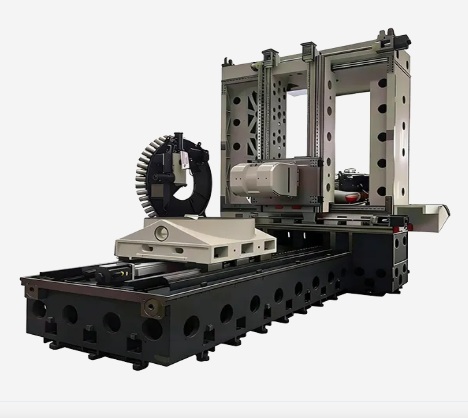
What should you look for? A rigid mineral‑cast base that dampens vibration for better surface finishes. Direct‑drive torque motors on rotary axes for precision positioning without backlash. A tool‑to‑tool change time under six seconds to keep non‑cutting time minimal. And a control system with RTCP (Rotational Tool Center Point) to simplify programming—so you’re not doing advanced math every time you rotate the part.
The EUMA HU series, for example, builds all of this into a horizontal platform with a box‑in‑box European design, A‑axis swiveling up to ±110 degrees, and a 45‑tool magazine with 5.0‑second changeover. It’s built for the shops that need to go from “we can do this” to “we can do this profitably.”
Setup time isn’t just an operational metric—it’s a competitive weapon. Shops that reduce changeover time capture more orders, deliver faster, and bid more aggressively. The industry’s top performers run their equipment 15 hours per day versus the average shop’s 8.5 hours, and they make nearly twice as much revenue per employee. That gap isn’t magic. It’s the cumulative effect of eliminating waste—one setup at a time.
Start with the lean experiments. Measure everything. Build the habit of continuous improvement. And when you’re ready to step beyond what process fixes alone can deliver, choose a platform that eliminates setups instead of just speeding them up.
Your spindle should be cutting, not waiting. Once you see the difference, you’ll wonder why you waited so long.


 English
 中文
中文 Pусский

