If you’re looking at CNC machines for your workshop, you’ve probably asked: Is a 5-axis machine worth it? Many manufacturers struggle with this question—they wonder if the benefits justify the higher cost and learning curve. This guide breaks down the real pros and cons of 5-axis CNC machining, in simple terms, to help you decide if it’s right for your parts and budget.
To be honest, 5-axis isn’t “better” than 3-axis or 4-axis for every job. It’s a specialized tool, and its value depends on what you make. Let’s break down what works—and what doesn’t.
Why 5-Axis CNC Machining Stands Out
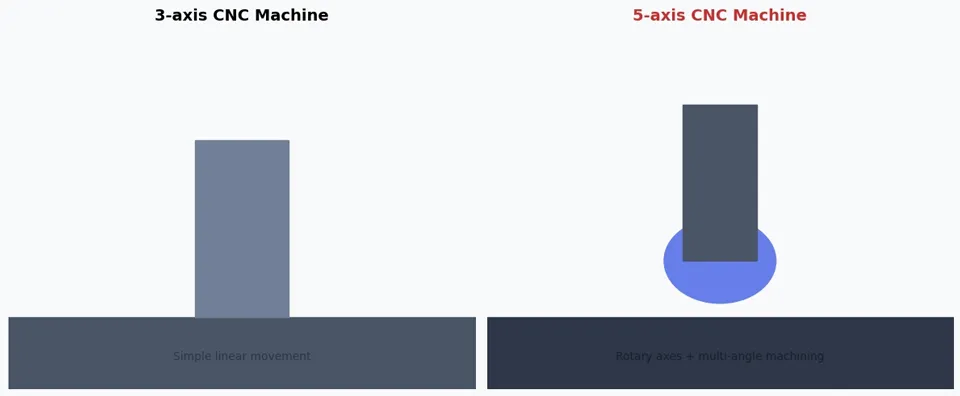
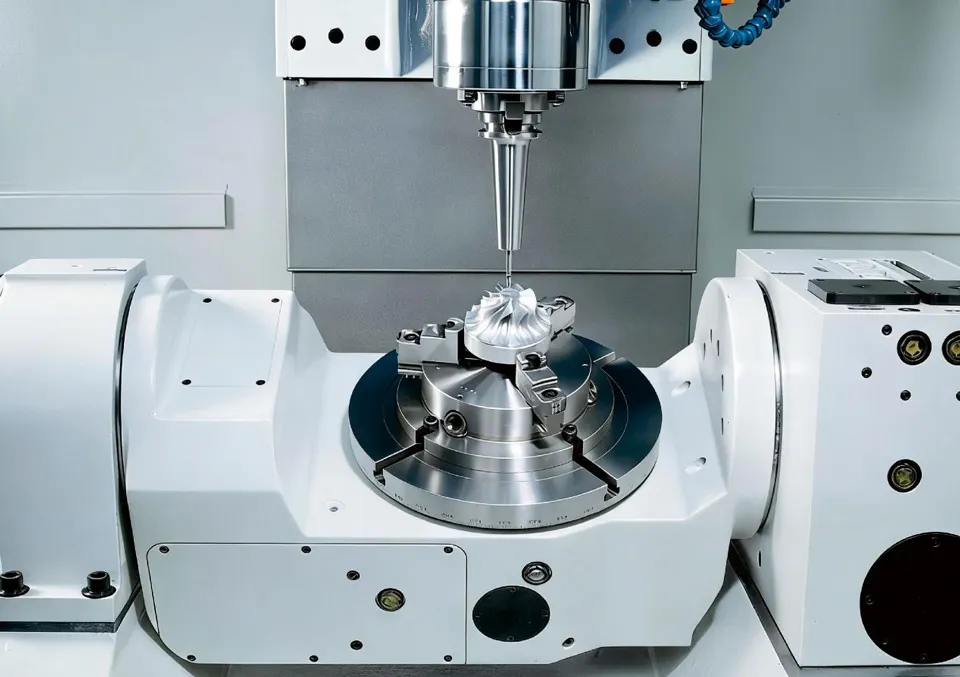
The biggest win with 5-axis machines is their ability to handle complex parts without re-clamping. Unlike 3-axis machines (which move only along X, Y, Z axes), 5-axis adds two rotary axes, letting the tool reach almost any angle in one setup. This changes everything for precision and efficiency, especially for high-value parts.
Accuracy is a big advantage. Re-clamping parts on a 3-axis machine leads to small errors that add up. With 5-axis, you finish complex parts in one go—no more cumulative mistakes. This is key for aerospace, medical, and automotive parts (like turbine blades or implants) that need tight tolerances (down to ±0.005mm).
It also saves time and reduces waste. Less setup time means faster production for complex parts. You can use shorter, sturdier tools for deep cuts, cutting down on vibration, tool wear, and scrap (we’ve seen scrap rates drop from 15% to under 1% for medical parts). And for hard materials, 5-axis spreads cutting force evenly, avoiding tool damage.
Versatility is another plus. A 5-axis machine lets you make simple brackets and intricate impellers alike—no need for multiple specialized machines. It’s great if you want to grow your business or take on higher-value projects.
The Disadvantages of 5-Axis CNC Machining
5-axis isn’t for everyone. Here’s what to watch out for, especially if you’re a small shop or new to CNC.
Cost is the biggest barrier. A 5-axis machine costs 3–10 times more than a 3-axis model. You’ll also need expensive CAM software, precision fixtures, and post-processing tools. If you only make simple, high-volume parts (like basic brackets), this cost is hard to justify.
There’s a steep learning curve. 5-axis programming is more complex—you have to coordinate five axes to avoid collisions. You’ll need skilled programmers who understand RTCP, and operators need training. One mistake can lead to costly machine damage or scrap.
Maintenance is more work. 5-axis machines have more moving parts, so they need regular, specialized care to stay accurate. They also need a temperature-controlled, low-vibration space to avoid precision loss. This adds to long-term costs.
It’s not always faster. For simple, flat parts, a 3-axis machine will be quicker. 5-axis simultaneous motion slows feed rates, making it a waste of resources for basic jobs.
How to Decide If 5-Axis Is Right for You
Ask yourself three questions: What parts do you make? What’s your budget? Where do you want to grow?
Choose 5-axis if: You make complex, high-precision parts; you want less scrap and setup time; you’re expanding into high-value industries; and you can afford the investment and training.
Stick with 3-axis (or 4-axis) if: Your parts are simple; cost is top priority; you don’t have skilled 5-axis programmers; or you focus on high-volume, low-margin work.
EUMASEIKI 5-Axis Solutions for Your Shop
As an integrated industry and trade enterprise specializing in CNC machines, we offer 3-axis, 4-axis, and 5-axis machining centers—our 5-axis models are designed to make the transition easy for new users. They have user-friendly programming, built-in collision detection, and full technical support to help you learn quickly.
We don’t just sell machines—we help you pick the right one. Send us your part drawings, and we’ll help you decide if 5-axis is worth the investment for your business.
At the end of the day, 5-axis is powerful—but only if it solves your problems. Focus on your parts and budget, and you’ll make the right choice.


 English
 中文
中文 Pусский

