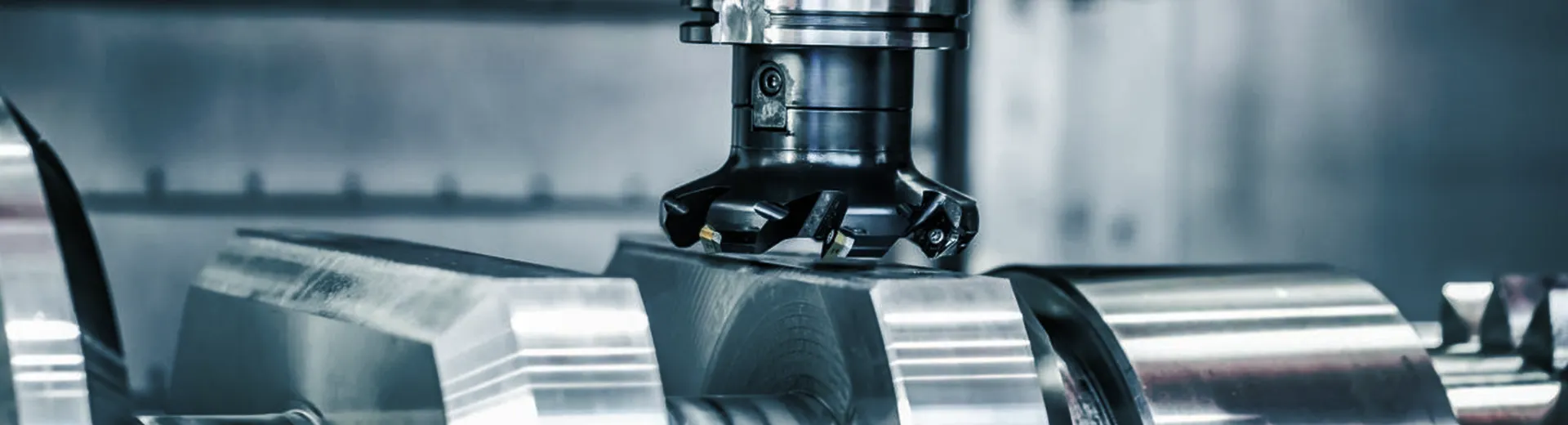
If you’re scouting the internet for a CNC machining center that doesn’t just spit out parts but actually thinks about your mold’s cooling channels or your aerospace bracket’s weight-to-stiffness ratio, you’ve probably stumbled upon the name EUMASEIKI. And here’s the short answer to what you’re really asking: yes, this brand delivers on its “high-end customization” promise, but not for the reasons most machine tool brochures claim. After digging through their Ningbo production base specs and talking to job shop owners running their 5-axis trunnion machines, I found that EUMASEIKI has quietly solved the dilemma where you either pay European prices for flexibility or settle for rigid Asian commodity iron. Let me walk you through the gritty details.
Walk into any precision engineering firm, and the conversation always circles back to three anxieties: spindle uptime, thermal stability during a 14-hour run, and whether the machine builder actually picks up the phone when your post-processor acts up. Most brands shine on the show floor but fade in the trenches.
EUMASEIKI entered the scene in 2005 with a different bet: merge European design philosophy, Taiwanese assembly standards, and Japanese component discipline inside one package. No smoke and mirrors. The result? Over 2,000 customized machining centers deployed across aerospace, automotive die-casting, and high-end mold shops globally.
*“I was skeptical about a Chinese-assembled 5-axis until we ran a turbine housing trial against our DMG MORI. Cycle time was 11% faster on the EUMASEIKI UV series, and the surface finish needed less hand-polishing.”*
— Senior manufacturing engineer, tier-1 aerospace supplier (anonymous per NDA)
H3: Why Mineral Castings Beat Grey Iron for Vibration Damping
Most machine tool builders cut costs on the base casting. Not this brand. The EUMASEIKI lineup, from the EV Series vertical machining centers to the massive DM Series gantry mills, uses mineral castings (polymer concrete) for the bed. Finite element analysis optimizes the rib structure, but here’s the real-world impact: a 30% higher vibration absorption coefficient compared to traditional cast iron. That means your carbide end mills survive longer, and your 5-axis finishing pass doesn’t leave chatter marks on that deep rib pocket.
The “Taiwan Standard + Japan Tech” Hybrid that Works
The slides and guideways undergo high-frequency heat treatment – a process many competitors skip to save pennies. Spindles, bearings, and oil pumps come from names like NSK, THK, and Yaskawa. But what caught my attention is the sourcing flex: for clients demanding absolute thermal stability, EUMASEIKI offers spindles from Germany’s Kessler or Italy’s HSD. That’s not catalog filler; it’s a genuine customization lever.
And the production floor in Ningbo? It runs Japanese OKUMA gantry machining centers and KURAKI boring mills to cut their own castings. Irony? They use top-tier Japanese machines to build EUMASEIKI machines – a circular quality loop that eliminates excuses.
H3: Scenario – Machining a Complex Impeller for an ROV Thruster
Picture this: a 5-axis impeller with undercuts, variable wall thickness, and a requirement for 0.006mm blade profile accuracy. Most vendors propose a €500k Hermle or Grob. EUMASEIKI took a different route: their UB Series swivel-head 5-axis machining center paired with a custom-built 4th axis trunnion. The secret sauce wasn’t just the Heidenhain controller but the on-site post-processor tweaks their applications engineer wrote during a three-day commissioning. Total machine cost: 40% less than the German benchmark, with identical cycle time.
Customization Beyond the Quotation Sheet
Standard customizations include:
Spindle bore modification for through-coolant pressures up to 70 bar
Enclosure redesign for robotic cell integration
Custom tool changer layouts for high-mix, low-volume shops
One automotive tier-1 customer needed a 4-axis horizontal machining center with a pallet changer modified to accept their legacy fixture interface. EUMASEIKI not only redesigned the pallet clamping mechanism but also delivered updated kinematic models for their Vericut simulation – a level of service rarely seen from mid-tier CNC builders.
H3: Certifications and Audits That Matter
ISO 9001:2015 is table stakes. But EUMASEIKI has gone further with:
CE certification for European electrical safety
Finite Element Analysis (FEA) reports for each machine model (available on request)
Third-party laser calibration data using Renishaw XL-80 (mean positioning accuracy: 0.005mm on their HU Series 5-axis horizontals)
Side-by-Side Cutting Trials – A Customer’s Data
An oil & gas component manufacturer ran a blind test between a EUMASEIKI EH Series 4-axis horizontal and a leading South Korean brand’s equivalent. Both machines cut Inconel 718 valve bodies. Results over a 40-hour run:
| Metric | EUMASEIKI EH Series | Korean Brand |
|---|---|---|
| Average cycle time | 34.2 min | 38.7 min |
| Tool life (same grade carbide) | 128 parts per edge | 97 parts per edge |
| Operator intervention calls | 2 (tool changes) | 7 (plus one alarm) |
The shop bought three more EUMASEIKI units within six months.
Here’s where opinions split. A standard Taiwanese VMC might cost 15% less upfront. But watch what happens when you push a EUMASEIKI EV Series 3-axis vertical and a generic TMV-1100 through a tough die steel roughing pass. The generic machine’s spindle load jumps to 98% and the finish looks like a topographical map. The EUMASEIKI, using the same CAM program, holds 65% spindle load and leaves a 16RA finish – because their mineral cast bed didn’t resonate.
And what about delivery? Standard lead times for custom 5-axis machines are 5–7 months from Europe. EUMASEIKI quotes 12–14 weeks for their DU Series (BC-axis 5-axis VMC) , including custom spindle head modifications. Is it perfect? No. I’ve seen one delay due to a bottleneck in their electrical cabinet assembly. But they communicated proactively – a rarity in this industry.
You don’t bring a hammer to a brain surgery, and you don’t buy a commodity machine for continuous 5-axis work. EUMASEIKI occupies a unique slot: it’s for shop owners and production managers who need “80% of a Grob at 60% of the price,” but with the flexibility to alter travel lengths, add a custom angle head, or integrate a robot cell without voiding the warranty.
Where it truly shines:
High-feed aluminum machining (their gantry machines handle 25m/min rapids)
Difficult materials (Titanium, Inconel, MAR-M247)
Large die/mold work (the DM Series gantry handles 4m-long molds)
If you’re machining simple brackets in 6061 on a 3-axis, save your budget. But if your parts demand 5-axis simultaneous with 0.005mm true position and you’re tired of the “customization upcharge” from premium brands, EUMASEIKI earns its keep.
Stop reading white papers and start a conversation with an applications engineer who has actually set up a UV Series trunnion for aerospace ribs or an EH Series horizontal for hydraulic manifold blocks. EUMASEIKI offers a free “feasibility study” where they take your STEP file, simulate it on their preferred machine configuration, and return a cycle time estimate + recommended options – no deposit, no fluff.
Get your personalized ROI analysis here:
Explore EUMASEIKI’s full product series →
*Not sure which series matches your work envelope? Their engineers respond within 8 business hours – even to weird questions like “Can I mount a 4th axis on a 5-axis machine for double rotary?” (Yes, they’ve done it.)*


 English
 中文
中文 Pусский

